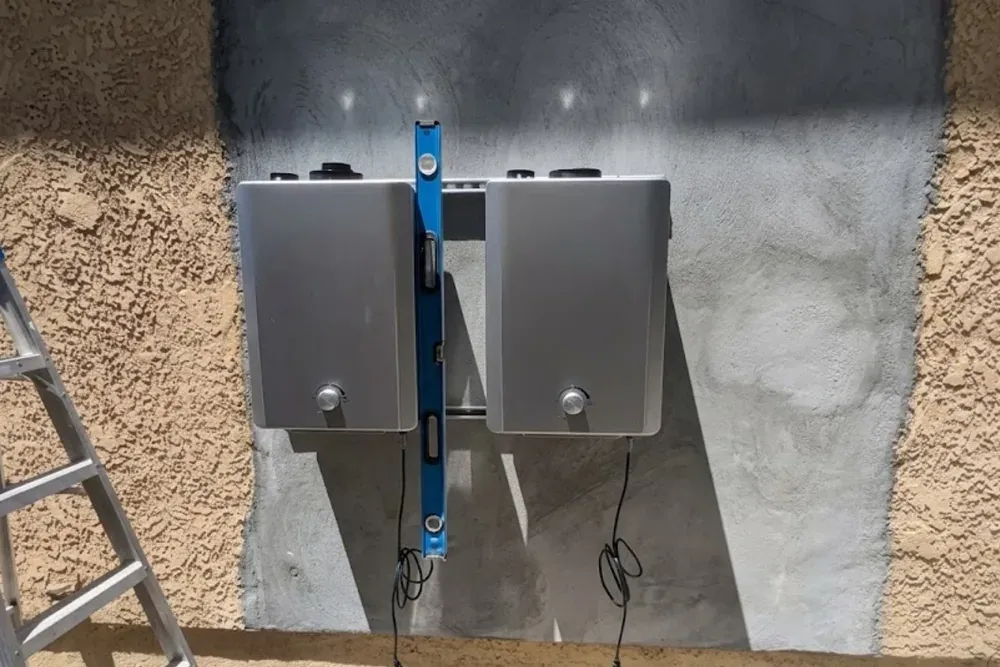
Why venting matters more on tankless units
Tankless heaters fire at a high rate to heat water on demand, and they produce a lot of exhaust in a short time. A poorly sized or sloped vent can trap condensation, let exhaust leak back or shut the heater down. Carbon monoxide is the serious risk.
Venting is regulated, and it follows the manufacturer's instructions and local code, not general habit.
Common vent types
Which one you need depends on the heater.
| Type | How it works | Notes |
|---|---|---|
| Non-condensing, metal vent | Hot exhaust leaves through stainless steel or similar pipe | Needs heat-rated vent material |
| Condensing, plastic vent | Cooler exhaust leaves through PVC, CPVC or polypropylene as the manufacturer allows | Needs a condensate drain |
| Direct vent | Intake and exhaust both run outside | Does not use indoor air for combustion |
| Power vent | A fan pushes exhaust out | Needs power and a termination location |
Vent material and the manufacturer's rules
Each heater lists the vent materials, lengths and number of elbows it allows. Using the wrong material, or running the vent longer than allowed, can void the warranty and create a hazard. Always follow the installation manual for your exact model.
Where the vent exits
The termination point has clearance rules from windows, doors, soffits and air intakes. These rules come from the manufacturer and from local code, and they differ by situation. We do not guess at a number here. Ask the City of Apopka building division what applies and ask your plumber to follow the manual and the code.
Dealing with this right now? Call the line and describe what is happening.
Call (407) 964-8940Condensate and drain
Condensing heaters produce acidic condensate that has to drain safely. The plumber installs a condensate line, often with a neutralizer, and routes it to an approved drain. A clogged condensate line can shut the heater down, so check it in a yearly service visit.
Warning signs of a vent problem
Watch for these signs and call a plumber if you see them:
- Soot or staining near the vent termination or the heater
- Frequent error codes or shutdowns
- A strange odor near the heater or in the room
- Water dripping from the vent pipe or termination
- A carbon monoxide alarm sounding. Leave the house and call 911 or your gas utility
Replacing a tank with a tankless unit
A tank heater often vents through a simple flue, while a tankless unit needs a different vent system and usually a larger gas line. Switching is a bigger job than swapping the appliance. Our tankless water heater page and installation page explain the process.
Questions to ask your installer
A short list protects you.
- Which vent type does this model use? The answer should match the manual.
- Where will it terminate? Ask them to show you the spot.
- How is condensate handled? Ask for the drain route.
- Who pulls the permit? Ask whether the job needs one and who handles it.
- What is tested at the end? Combustion and leak tests should be part of the job.
Yearly service for a tankless vent
Once a year, a plumber should inspect the vent pipe, the joints and the termination. They look for loose joints, sagging runs, blocked terminations and signs of leaking condensate. Descaling the heat exchanger is a separate task, but it is often done at the same visit.
A tankless heater that shows repeated error codes is telling you something. Do not keep resetting it. Call a licensed plumber, because the cause may be the vent.
Combustion air and where the heater sits
A heater installed in a closet or a garage needs enough fresh air for combustion unless it is a direct-vent model that pulls air from outside. The manual states the space and opening requirements. A heater that is starved of air burns badly and produces more carbon monoxide, which is why location matters as much as the vent itself.
Venting in Apopka's weather
Apopka averages about 50 inches of rain a year over roughly 115 rainy days, per climate data for the city, so a vent termination takes wind and rain often. The termination should be placed and protected so rain, insects and debris do not enter, as the manufacturer allows.
The City of Apopka maintains a building permit portal, and the building division can tell you whether a vent change needs a permit. Ask before work starts, because inspections protect you when you sell the home.
The same venting questions apply in Winter Garden and Altamonte Springs.
Standards and sources. Gas water heater work follows the manufacturer's installation instructions and the National Fuel Gas Code (NFPA 54), and plumbing work in Florida falls under the Florida Building Code, Plumbing. We cite these by name and do not quote section numbers from memory, so ask the City of Apopka building division which requirements apply to your address.
Tankless venting questions from Apopka homeowners
Usually not. Tankless units have specific vent requirements that the manual lists.
Many direct-vent models can, with the right pipe and termination. Follow the manual and local code.
Condensing heaters produce acidic water that must drain safely. A blocked drain can shut the unit down.
It is a good safety step. Follow the manufacturer's and local guidance.
Ask the City of Apopka building division, and ask your plumber what is typical.
Want a plumber to look at it? Call the line and describe what you see.
Call (407) 964-8940