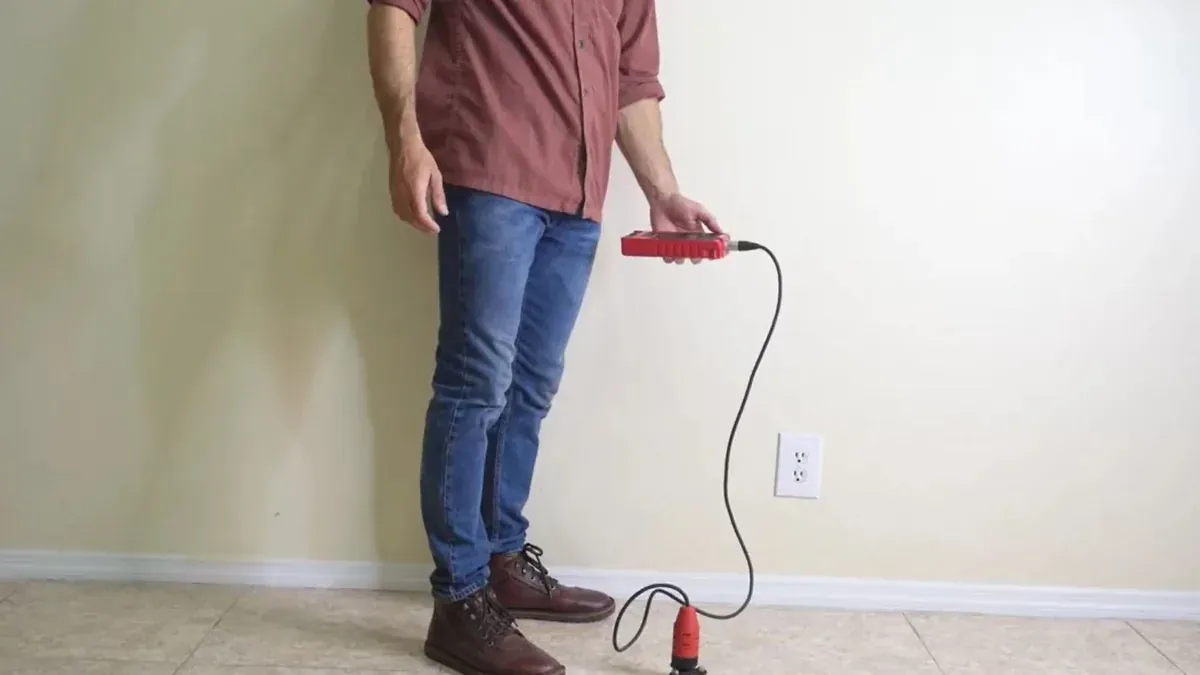
Step one: the meter test
Turn off every tap and appliance, including the ice maker and the irrigation system. Look at your water meter. Most have a small flow indicator, a triangle or a dial, that moves when any water passes. If it moves with everything off, water is leaking somewhere.
Write down the reading, wait fifteen minutes with nothing running and read it again. A change confirms a leak and gives you a rough idea of its size.
A simple order of checks
Work from the easy checks to the harder ones.
| Check | How | What it tells you |
|---|---|---|
| Toilets | Dye test in the tank | Silent flapper leaks |
| Under sinks | Dry the pipes and look or feel for moisture | Supply line and trap leaks |
| Water heater | Look at the base and the relief valve | Tank and fitting leaks |
| Irrigation | Close the irrigation supply and recheck the meter | Sprinkler line leaks |
| House valve test | Close the house main and watch the meter | Whether the leak is outside the house |
Check the toilets
Toilets are the most common source of hidden water loss. Add food coloring to each tank, wait fifteen minutes and look in the bowl. Color means a leaking flapper. Our toilet repair page covers the fix.
Walk the house with your hands
Water marks and soft spots show where water has been. Check ceilings under bathrooms, the walls behind sinks and the floor near the dishwasher and washing machine. Press on baseboards and flooring for soft, swollen or warped spots. Look inside cabinets with a flashlight.
Dealing with this right now? Call the line and describe what is happening.
Call (407) 964-8940Check outside
Look around the yard for wet spots, unusually green strips of grass and sunken ground. Check outdoor faucets and the area near the meter. If the house valve test shows the meter still moves with the house shut off, the leak is between the meter and the house. See water service line repair.
Signs that point to a slab leak
A warm spot on the floor, the sound of running water when everything is off and a hot water bill that has jumped suggest a leak under the slab. Do not break anything yourself. A plumber can find it with tools. See slab leak repair.
When to stop and call
Call a plumber when:
- The meter still moves after you have checked toilets, sinks and irrigation.
- You see water you cannot trace or a ceiling that is bulging.
- You hear water in a wall or under the floor.
- The leak involves sewage or a failed water heater.
- You are unsure and the bill keeps climbing. See leak detection.
Check the water heater and appliances
Look at the floor around the water heater for rust or dampness, and check the relief valve discharge pipe for drips. Pull the washing machine and dishwasher forward if you can and look at their supply hoses. Braided hoses can bulge or rust at the connection, and replacing them is a cheap way to avoid a flood. Check the ice maker line behind the refrigerator as well.
Keep a simple log
Write down the meter reading, the date and the time each time you check. A log shows whether the leak is steady or intermittent, and it helps the plumber choose the right tools. Photographs of the meter, any wet spots and your water bills support an insurance claim if damage has already occurred.
What not to do
Do not cut into walls or break floors to look for a leak, because you may hit a live pipe or an electrical line. Do not ignore a wet spot because it looks small, since water often travels before it shows. And do not leave a confirmed leak for later. Even a slow leak can rot framing and feed mold, so call a plumber once you have confirmed it.
Tools and records for Apopka homeowners
The City of Apopka's website has utility billing pages, which let you look at your use over time. A bill that jumps with no change in habits is a good reason to start these checks. Keep photos of the meter and the dates in case you need to explain a high bill later.
Apopka gets about 50 inches of rain a year, per climate data for the city, so wet soil outdoors is not always a leak. Check after several dry days before you decide.
We also help homeowners in Ocoee and Winter Garden with leak checks.
Standards and sources. Pipe and fittings that carry drinking water should be listed to NSF/ANSI 61, and installation follows the Florida Building Code, Plumbing and the pipe maker's instructions. We do not quote code sections from memory, so ask the City of Apopka building division what your job needs.
Leak finding questions from Apopka homeowners
Turn everything off and watch the flow indicator. If it moves, you have a leak.
No. Rain can do it. Check after several dry days and with the meter test.
You can notice signs, but finding the exact spot needs tools.
Run the meter test and the toilet dye test, then call a plumber if the cause is unclear.
Start with the City of Apopka utility billing pages.
Want a plumber to look at it? Call the line and describe what you see.
Call (407) 964-8940